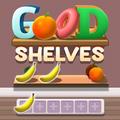











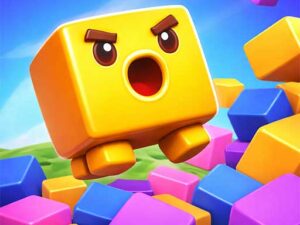

Good Shelves is a shelf-stacking organization puzzle that hooks you in the first thirty seconds. Slot boxes, jars and oddly-shaped parcels onto crowded shelves, fight gravity, and leave nothing dangling off the edge. The game is playable the moment it loads — no signup, no download, no waiting. This guide covers how to play Good Shelves, which controls matter, the core mechanics, the sharpest tips, a decision-flow cheat-sheet, a quick comparison, and a full FAQ. If this kind of browser arcade feels like your thing, the collection at Tiny Fishing is full of other bite-sized hits — Happy Cat, Soccer Drop Game, and Jump Catch are all worth a few minutes once you’ve cleared a level or two. For the curious, the Browser-based games background is a quick read on the tech that makes this kind of instant-play possible.

▶ Play Good Shelves Free Online
Why ❓ What is Good Shelves?
Good Shelves is an instant-play stacking puzzle built for the browser. It takes the shelf stacking and shape fitting idea and wraps it in a short, replayable loop: a run lasts under five minutes, and the rewards — score, coins, cosmetics — compound between attempts. It runs entirely client-side, so it loads on almost any device from a Chromebook to a mid-range phone.
There’s no tutorial wall. Good Shelves drops you straight into the action, and the first run is intentionally forgiving. The deeper mechanics reveal themselves run by run.
🎮 How to Play Good Shelves
The goal in Good Shelves is simple: survive, score, and come back stronger. A run starts with a base character, a fresh meter, and an empty score. As you progress, the game layers on pressure — faster speed, denser hazards, smarter opponents — while dropping rewards that let you push further next time. Between runs, a short upgrade screen lets you spend what you’ve earned.
The moment-to-moment rhythm is tap, react, commit. Press one key to move, react to a visual cue, and commit to a longer chain (a combo, a drift, a rope slice) when the game asks. Nailing all three beats in sequence is what raises your score from average to great.

🕹️ Controls
The control scheme in Good Shelves is minimal on purpose. No gamepad needed, no ten-key combo table to memorize.
| Input | Action |
|---|---|
| Mouse Drag / Touch | Drag items onto shelves |
| Right-click / Long-press | Rotate an item |
| Scroll / Pinch | Zoom the shelf view |
| U | Undo the last placement |
Touch controls are auto-detected on mobile and map to the same underlying actions as desktop.
⚙️ Core Gameplay Mechanics
Four mechanics drive every decision in Good Shelves. Understanding them individually is the fastest path to playing intentionally.
1. The Score Loop
Every action in Good Shelves feeds a score meter. Chained actions give multiplied points, and the multiplier resets on failure — so a clean string of simple moves almost always outscores a handful of flashy ones.
2. The Risk Curve
Risk scales with time. Knowing when to bank points safely instead of pushing for one more chain is the single most overlooked skill in the game.
3. The Resource Meter
Whether it’s boost, paint, candy, or combo, Good Shelves gives you a consumable resource. Treating it as currency, not as free, turns average runs into career bests.
4. The Feedback Beat
Good Shelves telegraphs every danger and reward with a visual beat — a flash, a shake, a color swap. Playing focused on visuals (sound optional) usually raises scores faster than playing loud.
🎯 Tips & Tricks for Good Shelves
Work down the list in order — each tip builds on the muscle memory of the one before.
- Tip 1 — Shape Tetris: Treat Good Shelves like Tetris with gravity. Curved boxes fit into odd corners; square boxes belong at the base. Placing square after square on top wastes the interlocks available with mixed shapes.
- Tip 2 — Category Sort: Sort by category in Good Shelves even when the level doesn’t demand it. Jars with jars, books with books; grouped items balance better than mixed stacks, and scoring bonuses reward tidy arrangement.
- Tip 3 — Edge Packing: Edge packing in Good Shelves is the fail-safe. Heavy items at the outside of the shelf tip the stability meter; load the heaviest items near the wall side and leave the outer edge for lighter finishers.
- Tip 4 — Space Reserve: Always leave one slot open in the first shelf of Good Shelves. A reserved slot absorbs the awkward late-level piece the game likes to throw at you, and prevents forced full-stack rearranges.
🧭 Decision Flow
When a run gets tense, the brain freezes before the fingers. This short flow chart is the mental script veterans run in the half-second between cue and input.
    [ Start of Good Shelves ]
           |
           v
    See next hazard? -- No --> Build momentum, keep line
           |
          Yes
           |
           v
    Close enough to react? -- No --> Slow, re-center
           |
          Yes
           |
           v
    Have power/combo ready? -- No --> Dodge and reset timing
           |
          Yes
           |
           v
    Commit the move --> Chain the payoff --> Back to [ Start ]
📊 Good Shelves vs Similar Games
How Good Shelves stacks up against titles that look similar on the surface — same vibe, different guts.
| Game | Camera / Layout | Signature Loop | Difficulty |
|---|---|---|---|
| Good Shelves | Side-on shelf | Shape fitting | Puzzle |
| Tetris | Grid drop | Line clearing | Puzzle-medium |
| Unpacking | Room view | Object placement | Chill |
✨ Key Features of Good Shelves
- Instant play: No install, no signup — Good Shelves loads in the browser and starts on the first click.
- Pick-up-and-play difficulty: The first run teaches the rules; difficulty ramps on a clean curve.
- Short-run loop: Sessions last under five minutes — ideal for a break or a commute.
- Progression carryover: Currency and cosmetics persist between runs.
- Responsive controls: Touch, mouse, and keyboard all map to the same action set.
- Low requirements: Runs on laptops, Chromebooks, and mid-range phones.
🌐 Good Shelves Online
Good Shelves runs online from the browser on its Tiny Fishing page — no launcher, no middleware. A stable connection is recommended for the first load, but once in memory, short blips rarely cost you a run. Leaderboards and cosmetic drops sync cleanly on live connections.
🆓 Good Shelves Free
Good Shelves is entirely free. No trial window, no level gate, no energy system. Ads sit at natural pause points rather than interrupting an active run. Full-screen works too — press F11 on desktop or tap the full-screen icon on mobile.
📥 Good Shelves runs in your browser
There’s nothing to download — Good Shelves is a browser game. To pin it for later, use ‘add to home screen’ on mobile or a bookmark on desktop. Some HTML5 games can be installed as a PWA; look for the install icon in Chrome or Edge.
🎲 Game Details
- Title: Good Shelves
- Genre: Stacking Puzzle
- Platform: Browser (HTML5)
- Controls: Keyboard / Mouse / Touch
- Players: 1
- Price: Free
- Best for: Quick sessions, break-time play, casual competitive scoring
👾 Similar Games to Good Shelves
If Good Shelves clicks with you, the games below scratch a similar itch:
❓ FAQs About Good Shelves
❓ Do I need to download anything to play Good Shelves?
No install needed. Good Shelves loads as an HTML5 game, which means any modern browser on desktop, laptop, Chromebook, or mobile can run it.
❓ Can I play Good Shelves on mobile?
Absolutely. Touch controls kick in automatically on phones and tablets, and the layout scales to fit any screen from small phones to tablets.
❓ Is Good Shelves free to play?
Yes. Good Shelves runs directly in your browser with no install and no paywall — every level, every mode, completely free.
❓ Is Good Shelves safe for kids?
Good Shelves has no graphic content and sticks to light, colorful visuals, which makes it safe for players of most ages when a parent is nearby.
❓ Can I play Good Shelves offline?
Once the page has loaded fully, most levels keep working if you lose connection briefly. A complete first load still needs an internet connection.
❔ Does Good Shelves penalize me for uneven stacks?
Yes — a stability bar tracks overhangs and uneven load. Heavy items on the edges drop the bar quickly and risk a collapse.
❔ Can I rearrange shelves mid-level?
Yes. Any item can be dragged off and reslotted while the level is active. Undo covers a single misstep instantly.
❔ Do difficulty levels add more shelves?
Difficulty mostly adds awkward item shapes rather than more shelves. Later levels introduce fragile glass jars that need a level base.
❔ Is there a timer on Good Shelves?
Story mode is untimed; the weekly challenge mode runs a three-minute timer for leaderboard placements.
One thing separating casual players from the dedicated Good Shelves crowd is session discipline. Short three-to-five-run sessions focused on a single skill beat long, unfocused marathons every time. Pick a theme per session — ‘combo timing,’ ‘resource saving’ — and the score curve follows.
A quick scoring note: the Good Shelves leaderboard is driven more by consistency than by peak performance. A run with no crashes and moderate scores will outperform a run with one brilliant chain and two early failures. Top-ranked players usually describe their best runs as ‘boring’ — clean decisions, controlled pacing.
If you’re sharing Good Shelves with a friend or sibling, swap the seat every second run. Watching someone else play and narrating their moves out loud is one of the fastest ways to see tells and patterns you were missing on your own attempts.
One underrated habit: at the end of a session, write down the single skill that felt weakest. Next session, start with a five-minute warm-up targeted at just that skill. Players who keep a short note on their worst moment from each session climb leaderboards faster than players who only chase new high scores.
📦 Slot the Last Box Home
Good Shelves rewards repeat visits — first run teaches the rules, second introduces the risk curve, third is where it clicks. Keep these tips nearby, play in short focused bursts, and your score line creeps up fast. ▶ Play Good Shelves Now